


Differences between Liner and Tramp ocean shipping
When it comes to moving cargo by sea, many companies ask the same question: what are the differences between Liner and Tramp ocean shipping?
And the most important one: which option makes more sense depending on the type of cargo, how urgent the shipment is, or the market you want to reach?
This is where confusion usually starts.
Because in the middle of complex logistics decisions, tight timelines, and strict budgets, many companies end up choosing a shipping model without fully understanding what it involves.
In the end, the results show up as unexpected extra costs, inefficiency, or worse, a poor logistics experience.
That’s why in this article we break down the differences between Liner and Tramp ocean shipping, so you can choose correctly, avoid mistakes, and get the most value out of every route.
What is Liner ocean shipping?
It is a type of scheduled ocean transport service that operates under predefined routes, departure dates, and published rates.
So, it works much like a bus line or a commercial flight.
The best part is that the vessel has regular sailings, visits the same ports, and accepts different types of cargo that fit its conditions, especially containerized freight.
This model is designed to offer predictability, frequency, and stability.
That’s why companies that use it can plan shipments ahead of time, knowing exactly when their cargo will depart, how much it will cost, and the estimated transit time.
What is Tramp ocean shipping?
This is a commercial navigation model defined by total flexibility.
Unlike Liner service, which operates with fixed routes, defined ports, and scheduled sailings, Tramp shipping does not follow a predefined itinerary because it works on demand and adapts completely to the shipper’s needs.
In practice, that means a Tramp vessel sails only when there is a closed contract to move a specific cargo to a specific destination on a specific date.
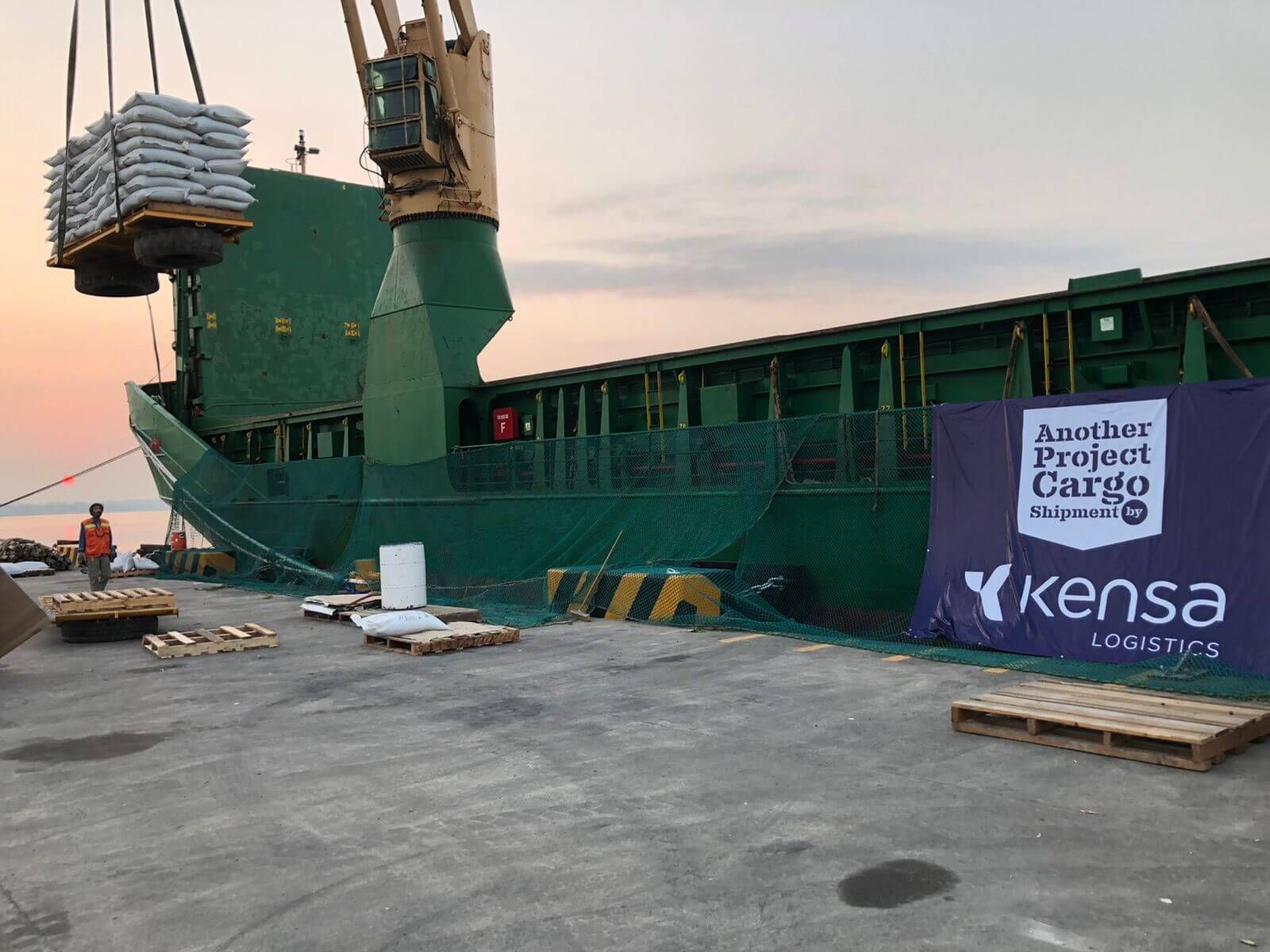
This type of service is usually used for large volumes of bulk cargo, such as minerals, grains, oil, coal, steel, timber, heavy machinery, or project cargo.
Most importantly, everything is negotiated individually, and there are no standard rates or regular frequencies.
Main differences between Liner and Tramp
If you work in logistics, foreign trade, or international procurement, you know that choosing the right type of shipping can make the difference between an efficient shipment and an inefficient (and expensive) supply chain.
So understanding the details of each one helps you decide with no room for error:
- Types of cargo
This is one of the most obvious and also most decisive differences.
Liner shipping is designed mainly for containerized, general cargo, and smaller volumes.
In other words, it’s ideal for frequent, stable, and relatively uniform shipments.
Tramp shipping, on the other hand, is built for bulk cargo such as minerals, oil, gas, grains, and liquid or solid products that don’t move in containers.
There are no fixed routes or schedules here. What matters is the cargo and its specific characteristics.
So, if you ship industrial or consumer products, you’re probably in the Liner world.
But if you deal with raw materials or high-volume cargo, Tramp is your terrain.
- Frequency and routes
Another major difference is how the trips are organized.
Liner works like a “sea bus”: it has regular frequencies, predefined itineraries, and fixed port calls.
In this model, shipping lines publish routes and sailing dates in advance.
This gives predictability and makes planning easier, but it also creates limitations. For example, if you miss the vessel, you need to wait for the next one.
Tramp works with a completely different logic.
It’s more like a maritime taxi: it’s chartered based on need, with no fixed routes or set schedules.
So the vessel goes where it’s needed, when it’s needed.
Of course, in exchange for that flexibility, it requires more customized logistics planning.
- Contracts and rates
This is where many companies take risks without realizing it.
In Liner shipping, rates are standardized and published. Carriers set prices depending on the type of cargo, the route, and market conditions.
That’s why contracts tend to be more straightforward, which makes booking easier and faster. There is less room for negotiation, but there is more transparency.
Tramp shipping, in contrast, is based on single voyages (voyage charter) or time-based contracts (time charter).
So rates are negotiated depending on volume, urgency, distance, and even spot market conditions.
- Operational flexibility
Do you need to adjust your operation on the fly? This is where Tramp has the advantage.
Liner shipping has a more rigid structure. It fits best for companies that ship frequently and can work within a fixed logistics calendar.
But if you have unusual cargo, special routes, or need to reach less commercial ports, you will run into limitations.
Tramp shipping, in contrast, is pure adaptability. You can negotiate everything from the vessel type to the destination port.
As a result, it’s ideal for complex projects, irregular shipments, or specific needs that don’t fit into a regular shipping schedule.
- Typical users
Finally, it’s worth looking at who uses each model.
Liner ocean shipping is preferred by import and export companies, logistics operators, and well-established supply chains.
Any business that deals with finished goods, parts, or cargo that requires consistency tends to fit well into this model.
Tramp shipping, on the other hand, is common for large industries such as mining, oil and gas, agribusiness exporters, and energy companies.
Especially because these organizations move huge volumes and need tailored contracts for non-containerized cargo.
Advantages and disadvantages of each model
Most companies stick to the same ocean shipping model out of habit, without checking whether it is truly the most efficient option for their cargo, destination, or business model.
So how do you make the best decision? First, by clearly understanding what each model offers:
Liner ocean shipping: structure, frequency, and predictability
Real advantages:
- Regular service. If your business depends on a stable supply chain, this model gives you peace of mind. You know when the vessel departs, when it arrives, and how much it will cost.
- Controlled costs. Rates are usually published, which helps you build budgets and avoid surprises.
- Global network. Major Liner carriers connect practically every commercial port in the world.
But watch out for the limitations:
- Minimal flexibility. If you have urgent cargo outside the schedule, you don’t have many options: either you wait or you pay extra.
- Fixed routes. You’re tied to the itinerary. If your destination port isn’t included, you’ll need connections or transshipment, which means more time and money.
Tramp ocean shipping: total freedom, with trade-offs
Strong advantages:
- Total adaptability. If your cargo is unique, high-volume, or has special requirements, Tramp lets you build a tailor-made service.
- Better economics at scale. For large-volume cargo, it can be more cost-effective than splitting shipments into multiple containers.
But with certain demands:
- Higher operational complexity. There are no published schedules or fixed sailings. Everything is negotiated and coordinated from scratch.
- Not efficient for small cargo. If you don’t have enough volume, you’ll probably pay for unused capacity.
Which one should you choose based on your logistics needs?
When choosing between Liner and Tramp ocean shipping, the first thing to understand is that there is no “best” option in absolute terms.
What exists is the most suitable option based on your real logistics needs.
And this is where many companies make mistakes, either because of lack of information or because they follow a standard model that doesn’t necessarily match their operation.
So, which one should you choose?
The answer is in your cargo volume, type of goods, routes, shipment frequency, and how much control you need over the operation.
Sometimes a company may even need both models at different times of the year or depending on the type of customer they serve.
That’s why understanding the differences between Liner and Tramp ocean shipping gives you a real competitive advantage.
Because it’s not only about moving cargo. It’s about moving it properly, at the right cost, and with the reliability your customer expects.
Conclusion
Throughout this article, we covered the essentials, from the operational structure of each model to the most common use cases depending on cargo type and shipment frequency.
But beyond that, what we really want to make clear is that you’re not alone in this decision-making process.
We know what it takes to manage logistics in an environment where every minute counts and where the margin for error is minimal.
At KENSA Logistics, we live it every day. And that’s why we don’t just offer shipping: we offer clarity, commitment, and solutions tailored to each customer’s reality.
Because behind every shipment, we know there is a person waiting for concrete answers, and we take that very seriously.
Our team understands both the operational challenges and the specific requirements of each type of cargo. And that makes the difference.
So, if you’re evaluating which option makes the most sense between Liner and Tramp ocean shipping, or if you simply need guidance, contact us today and discover how we can help you make logistics decisions that fit your needs.